Beyond the Minimum:
OHS Laws & a Farm’s Responsibilities
for the Safety of Others
This summary is based on incidents that occurred in Saskatchewan in 2024 and 2025, and was recently covered in The Western Producer.
What Happened
A man was cutting grass on his property when a contracted spray plane flew over his yard while applying pesticides to surrounding cropland. A similar incident had occurred in 2024, where pesticide drift reportedly damaged the family’s garden.
After the 2024 incident, the acreage owner spoke with the local farmer, and the aerial applicator compensated the family for the damage.
Following a similar flyover in 2025, the situation escalated. In an interview, the individual stated:
“We are never advised when application is to take place or what is being applied. In both of these incidents, me and my wife were in the yard … fully exposing us to the chemicals being applied… We’re (now) in a court battle over it.”
Source: Acreage owners take spray plane firm to court
What to Understand
Under occupational health and safety (OHS) legislation, farms have a responsibility to help ensure work is carried out safely not only for workers and contractors, but also in a way that minimizes risk to others who may be affected by their operations, including neighbours.
While this case is proceeding through civil court and appears to focus on the aerial applicator, situations like this can fall under OHS legislation and involve the shared responsibility for health and safety of both the farm and the contractor.
Farms often hire contractors to complete work they don’t have the time, equipment, or expertise to do themselves. For example:
A mechanic repairing equipment in a field
A veterinarian treating livestock
An aerial applicator spraying crops
While contractors bring specialized skills, hiring them does not remove all safety responsibility from the farm. When a farm brings a contractor onto the work site, it still has important OHS responsibilities related to that work.
These responsibilities include taking reasonable steps to ensure:
The contractor is informed of any hazards related to the farm and its operations
The work can be performed safely, with appropriate controls in place
The contractor understands their own safety responsibilities and has systems in place to follow applicable requirements (such as OHS legislation, transportation of dangerous goods (TDG) regulations, and licensing requirements).
Key Takeaways
A farm can hold more than one legal role at the same time (e.g., owner, contracting employer and supervisor in this case) and each role comes with its own responsibilities.
Hiring a contractor does not remove a farm’s health and safety responsibilities.
If the farm directs the work, controls the work site, or provides supervision to any degree, it can take on additional legal duties.
Farms are considered work sites under OHS law, meaning responsibilities extend beyond employees to include contractors, service providers, visitors and others who could be affected by the work.
Only one party can control a work site at a time if this is unclear or not properly assigned, responsibility may fall back to the farm.
Managing contractors, communicating hazards and demonstrating due diligence are key to meeting legal obligations and protecting everyone on the work site.
Coming Soon…
Watch for AgSafe Alberta’s Managing Contractors on Alberta Farms: A Practical Guide. This resource is in the final stages of development and will help you:
Better understand contractor-related situations and the risks involved
Access simple, customizable templates you can use right away
Identify what to look for when selecting and hiring a contractor
Take practical steps to support due diligence and safer work practices
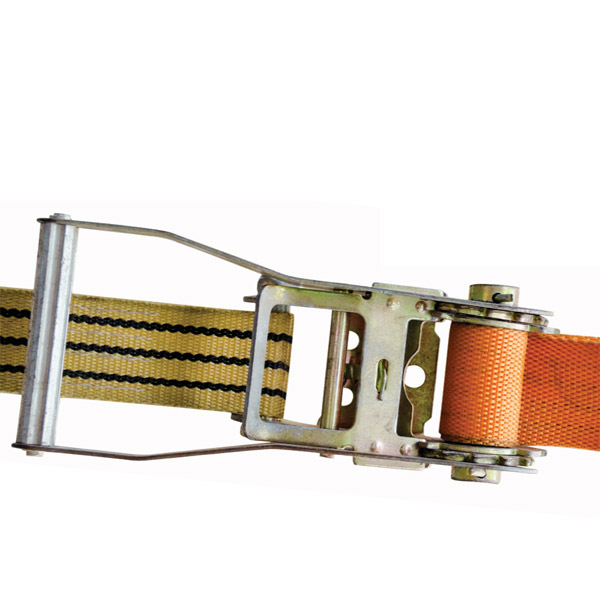
Load Securement
Proper load securement is just as important in agriculture as it is in any other industry. Watch this video from the Alberta Construction Safety Association with your farm team who will be required to secure loads, inspect your load securement devices, and ensure that everyone required to use them is both trained and competent in load securement.
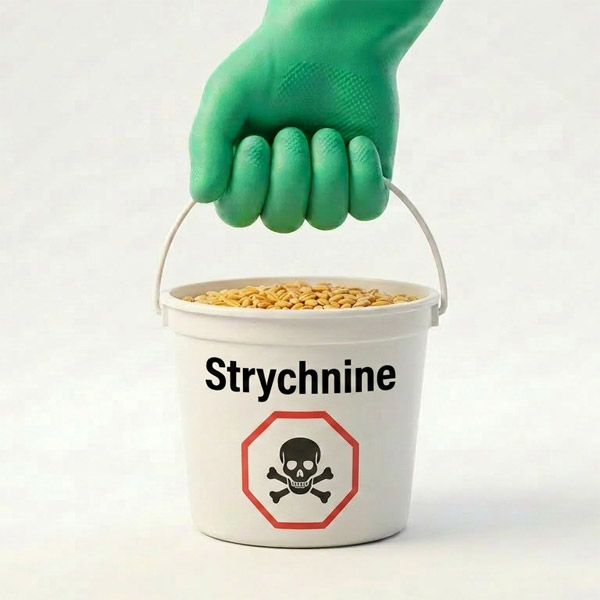
FREE Strychnine Supports!
In addition to a section of our resources page dedicated to strychnine safety, all of our paid courses are free until November 2027 using promo code STRYCHFREE !
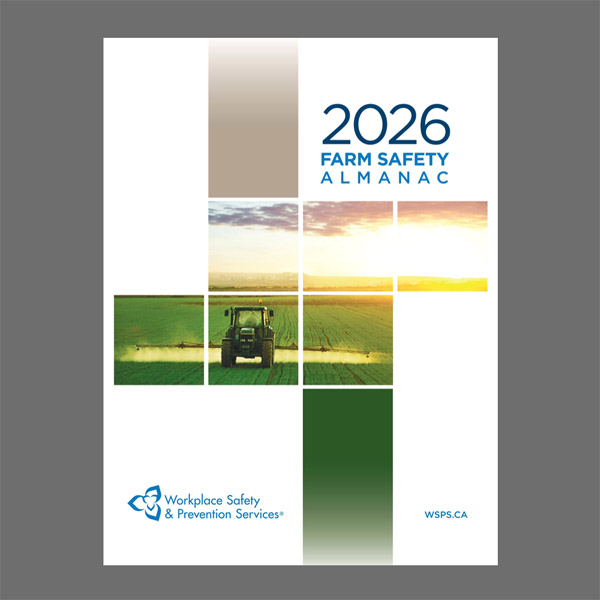
2026 Farm Safety Almanac
Check out Workplace Safety & Prevention Service’s (WSIB) 2026 Farm Safety Almanac! This guide uses real WSIB injury data to create tips and checklists to help farms prevent injuries.
Safety Myth of the Month
“I am only a lead hand… I can’t go to jail if someone gets seriously injured or killed at work.”
Whether someone is called a lead hand, foreman/forewoman, manager, senior technician, or something else, it is critical to remember that a supervisor is a supervisor, regardless of title. The key question is whether that person has a degree of control or authority over another worker, not only the farm’s workers.
A supervisor is a person in charge of a work site or work area, or who has authority over a worker. Supervisors are responsible for doing everything they reasonably can to keep the workers under their supervision safe. This includes things like:
Taking all necessary steps to protect the health and safety of the workers they supervise.
Ensuring workers comply with Alberta OHS legislation.
Telling workers about any hazards they know about or could reasonably expect in the area where the work is being done and what the hazard controls are.
Reporting any unsafe actions or conditions at the work site to the employer.
(Alberta King’s Printer, 2025, s.4)
Like businesses and individuals in other industries, farms and the people working on them may be held criminally responsible for deaths and injuries in the work site. Section 217.1 Duty of persons directing work in the Criminal Code of Canada came into effect in 2004 and updated how criminal liability for workplace deaths and injuries is established. This section of law addresses how criminal responsibility is assigned to organizations for the actions (or inaction) of their representatives and creates a legal duty for anyone who directs the work of others to take reasonable steps to protect the safety of workers and the public (Government of Canada, 2019).
Want to see how this plays out in real situations? Check out this Alberta case where a contracting company was fined and a supervisor sentenced following a worker’s death in Edmonton: Contracting company fined, supervisor sentenced following death of Edmonton worker | Insurance Business
Are You Prepared for a Severe Storm?
High winds, hail, lightning and tornado watches, storms happen, and it is just good practice to have a plan for when “lightning strikes.”
To help you create a plan for your farm and be prepared for the somewhat unexpected, we invite you to visit the AgSafe Alberta website for tools and resources to support you. Some of these are listed below:
How Are You Protecting Your Assets?
How are you protecting your farm team, equipment and property? Stop and really think about it. In fact, download and use this review form to help you! Farm Safety Review
Some questions you can find in the review form include:
1. Do I truly prioritize safety over speed, production targets or short-term costs?
Why? This sets the tone for everything else on the farm.
2. Have all workers (including family, seasonal and new hires) received thorough safety orientation and task-specific training?
Why? Training is a good way to prevent incidents.
3. Do workers know what hazards are, how to recognize hazards and feel empowered to stop work if something feels unsafe?
Why? This reflects both awareness and a strong safety culture.
4. Is all equipment properly guarded (e.g. shields on PTOs, augers, belts, etc.) and are guards replaced after maintenance?
Why? Machinery hazards are among the most severe and common on farms.
5. Are lockout/tagout procedures in place and followed before servicing or cleaning equipment?
Why? Critical for preventing entanglement, crushing and unexpected startup injuries.
6. Are manure pits, silos and grain bins treated as confined spaces with entry permits and rescue plans?
Why? These areas have high-consequence hazards and can result in fatalities.
7. Do workers have Safety Data Sheets (SDS), access and training on proper handling, mixing and spill response? Do they know the signs and symptoms of exposure?
Why? These are essential for chemical safety and emergency response.
8. Do all workers know emergency procedures, evacuation routes and where to meet (muster point)?
Why? Emergency preparedness matters when seconds count.
9. Are first-aid kits, fire extinguishers, AEDs (if applicable) and emergency eyewash stations stocked and accessible?
Why? Immediate response capability can significantly reduce harm.
10. Do I investigate incidents, near-misses and injuries and use them to make real changes?
Why? This drives continuous improvement and helps prevent repeat events.
Safety Toolbox
This Safety Toolbox is your go-to for quick, easy access to safety tips, tools and training.
When was the last time you visited the AgSafe Alberta Store? Check it out today and see if there is anything you can use on your farm!
Tick Talk! Everyone is talking about ticks right now, so here are some great resources where you can get more information:
BCRC Protect Your HerdOntario Federation of Agriculture’s Tick Protection & Prevention Information
CCOHS How to Prevent Tick-borne Diseases at Work
Government of Canada How to Prevent Tick Bites
CBC News: Tick Invasion – New Species Bring New Risks to Canada
Heat stress is a significant threat to agricultural workers across the country and thanks to Occupational Health Clinics for Ontario Workers Inc. (OHCOW), protecting them has just become easier. Check out these resources today!
Heat Stress CalculatorOHCOW – Heat Stress Toolkit
OHCOW – Recognizing Heat Stress Video
OHCOW – Heat Stress – A Life-threatening Occupational Illness with Short and Long Term Effects
OHCOW – Heat Stress Effects InfographicHow are you preventing needlestick injuries on your farm? Check out these videos from Upper Midwest Agricultural Safety and Health Center (UMASH):
Preventing Needlestick Injuries – Proper Use on Dairy FarmsPreventing Needlestick Injuries – Proper Use on Swine and Hog Farms
Webinar: Don’t Get Stuck – Needlestick Injuries in Veterinary Medicine
Great Plains Center for Agricultural Health’s Alive & Well Newsletter from June 2026 has some interesting articles, including one titled “New Findings Raise Concern: Dementia Increases Farm Injury Severity: Farm Families Alive & Well Newsletter